Botswana

Up with Paratus

Fiber Up with Paratus

Paratus is a pan-African telecommunications provider operating one of the continent’s most extensive independent networks. In Botswana, the business delivers enterprise grade connectivity solutions cloud hosting, and last-mile internet for homes and businesses. Our network is supported by over 20 years of continuous investment across Africa and 10 years in Botswana, to ensure reliability, capacity and resilience. All these investments lead into one of the most transformative technologies shaping Botswana’s digital future, fiber optic networks.

Fiber Up with Paratus

What is Fiber

Fiber-optic technology uses strands of glass, thinner than a human hair, to transmit data as pulses of light. Fiber is different from other access technologies such as copper, fixed wireless/radio or satellite, which send data using electrical signals or radio waves. These technologies remain important and widely used, especially for areas where fiber cannot easily be deployed, but they naturally have limitations in speed, signal stability or how much data they can carry at once.

Deploying a fiber network is complex and resource intensive. The investment goes into both the physical infrastructure and the specialised skills needed to install and maintain it. Costs typically come from,

Once it is deployed, fiber has very low maintenance and can support future speeds simply by upgrading the electronics at each end.

Fiber Delivers

Very high speeds
Minimal latency
High reliability
Resistance to electromagnetic interference
Massive capacity for future scaling

Paratus Fiber Investments

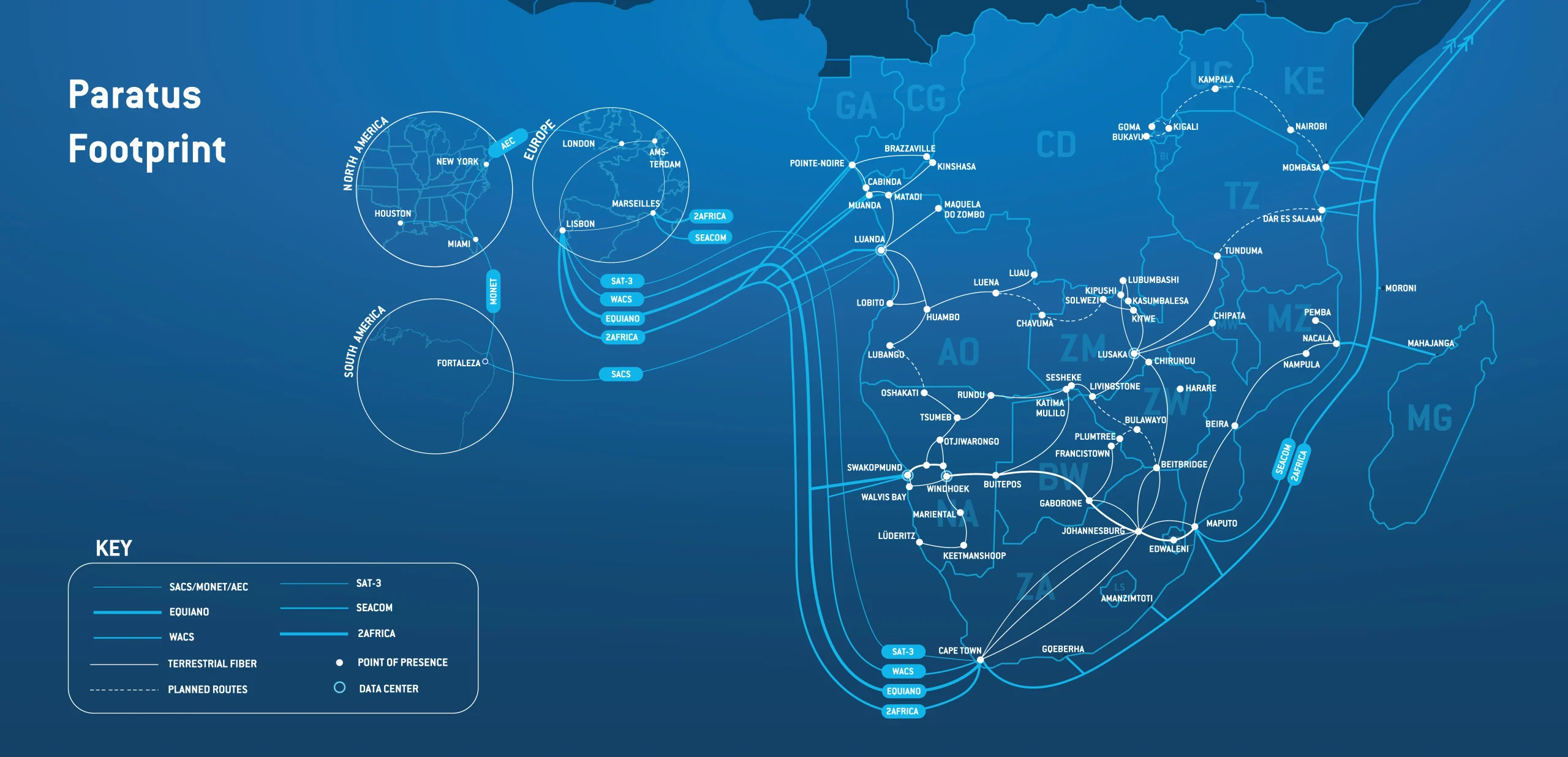
Gaborone Metro Fiber Ring – Paratus has built a high capacity fiber ring encircling Gaborone’s major commercial and residential zones. A ring structure allows for traffic load balancing, and automatic re-routing, resulting in consistent uptime and network stability

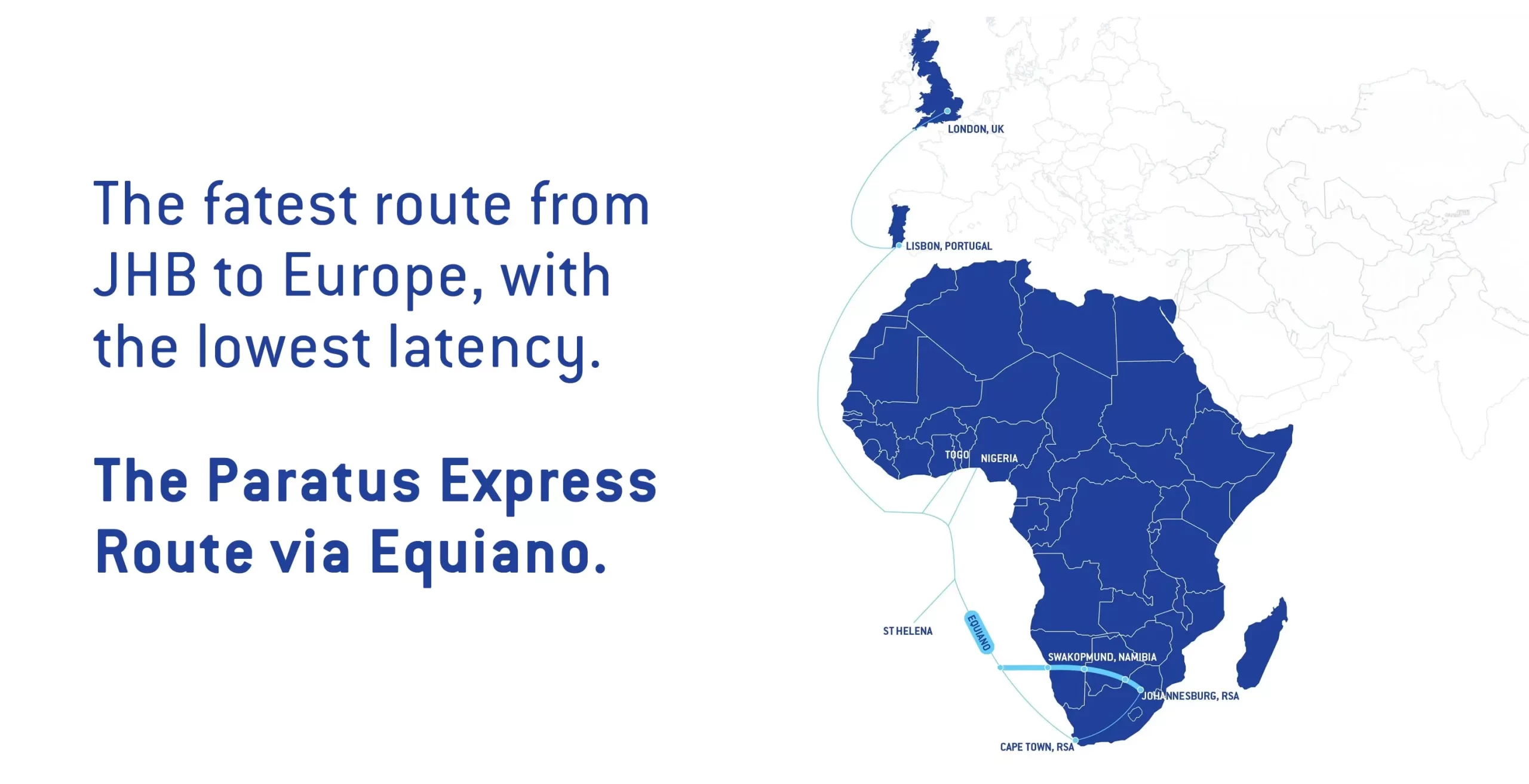
BKF Route (Botswana Kalahari Fiber) – The 840 km BKF route, completed in early 2024, creates a direct, low-latency path to Namibia and the Equiano cable.

Plumtree Cross-Border Link – A route from Gaborone through Plumtree (Zimbabwe) toward Zambia, forming part of the “Paratus SADC Highway” fiber connection. Provides an alternative international path and strengthen regional redundancy.

The Tlokweng route and Lobatse routes – independent routes traversing the borders to various hubs in South Africa.

Equiano Subsea Cable Landing – Paratus is the landing partner for Google’s Equiano subsea cable in Namibia. The cable provides ultra-high-capacity, low-latency links to Europe. Paratus’ terrestrial routes, such as BKF, connect Botswana to this major international artery.

Connectivity quality is shaped by several technical and operational factors that influence how the service performs in real life.

Latency refers to the time it takes for data to travel from the user's device to a destination and back. Lower latency results in a more responsive experience, especially for video calls, gaming and cloud services.

Ping is simply the measurement of that latency in milliseconds. A lower ping means smoother interactions.

Throughput is the actual volume of data successfully delivered to a device in a specified amount of time. Even if a plan advertises a high speed, poor throughput results in buffering and slow downloads.

Contention ratio describes how many customers are sharing the same segment of network capacity. A lower contention ratio provides better and more consistent speeds during peak times when usage is highest.

Backhaul quality determines how efficiently traffic moves between the local access network and the national or international core. Strong backhaul infrastructure such as Paratus’ routes to Equiano, and Internet Exchanges, improves access to global platforms and reduces lag.

Traffic management and capacity planning ensure the network is not congested. Paratus actively scales capacity, manages routes, and prevents bottlenecks, directly influencing performance.

Service operations also contribute to quality. Continuous monitoring, early fault detection, and rapid response reduce downtime and maintain service stability.

Quality equipment at every layer matters: higher-grade switches, routers, and optical equipment create lower delays, higher resilience and better throughput from the backbone to the end user.

Fiber Up with Paratus

Terms to Remember

Get up to speed on fiber and test your knowledge with the Paratus Quiz.

Choose Your Country