


Paratus Botswana, in partnership with Eutelsat, participated in the Future of Mining Summit 2026 as...


Benefits of signing up with Paratus
- Expert local installation services
- Technical consultation and integration support
- Readily available in-country stock
- Access to branches nationwide
- Local invoicing & flexible payment options
- Warranty returns assistance
- 24/7 technical support
Hardware
We offer a selection of hardware options to suit different usage requirements. Paratus also provides compatible accessories to support optimal performance. Contact us to check available stock.
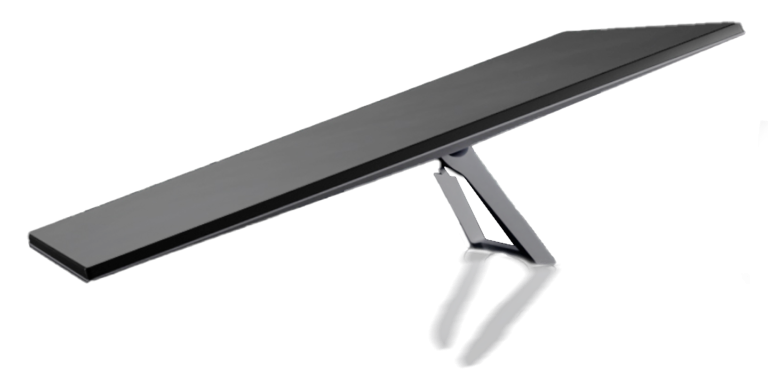
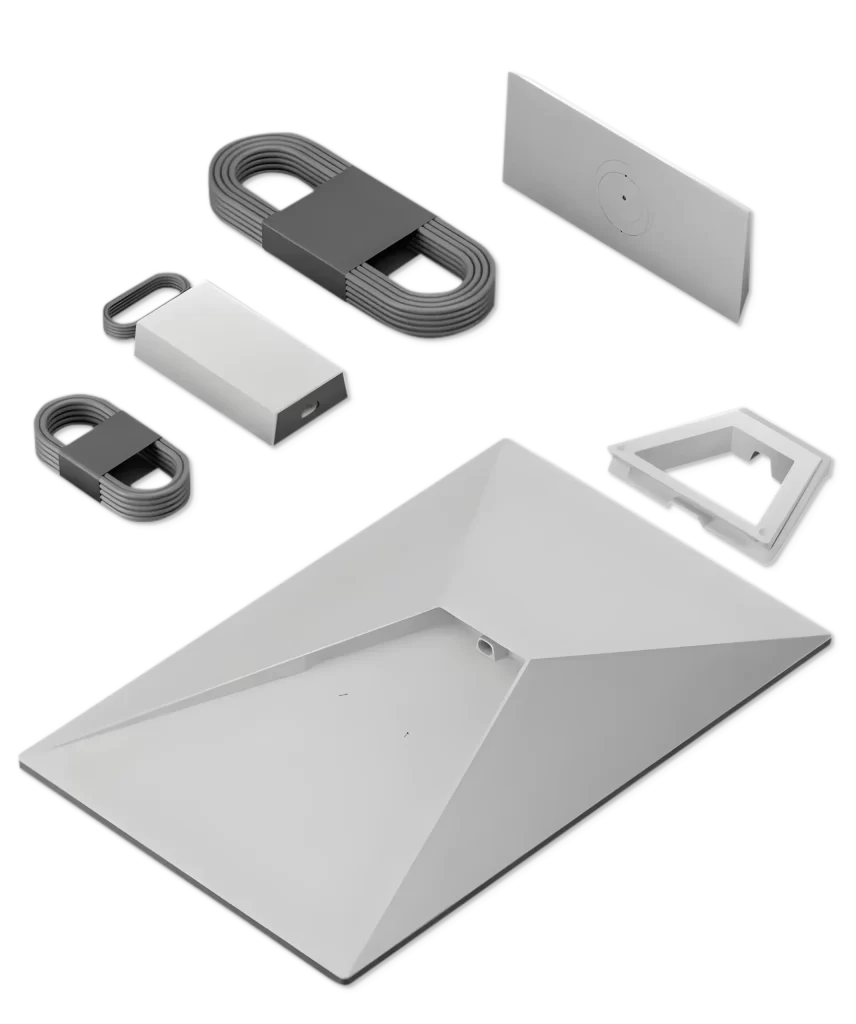
Standard Kit
Best for everyday internet applications like streaming, video calls and more.
What's in the Box
- Starlink Antenna & Kickstand
- Router
- Power Supply
- Starlink Cable 15.2m
- AC Cable - 1.8m



Starlink Mini
A compact, portable kit designed to deliver reliable, high-speed internet wherever you are.
What's in the Box
- Starlink Mini with Integrated WiFi
- Kickstand
- Mini Pipe Adapter and Flat Mount
- 15m DC Power Cable
- Power Supply
- Starlink Plug
Free installation on a 36 month contract within 50km of a branch.
Terms and conditions apply.
Local Priority Service
Coverage: Services may be used within the country or during regional travel (outside your service address country for up to 60 consecutive days).
All Priority services will now be capped.
Once the cap is exceeded, the service speed will be reduced to approximately 1Mbps.
Once the cap is exceeded, the service speed will be reduced to approximately 1Mbps.
Global Priority Service
Coverage: Service plans are intended for global and ocean coverage (such as Maritime), and support in-motion use anywhere Starlink is available.
All Priority services will now be capped.
Once the cap is exceeded, the service speed will be reduced to approximately 1Mbps.
Once the cap is exceeded, the service speed will be reduced to approximately 1Mbps.
Top-Up Data Pricing
Once your monthly data allocation is depleted, you can purchase additional data as follows:
Note: Unused data does not roll over to the next month.
• All prices exclude VAT
• Pricing is based on a 36-month contract
• Other contract terms available upon request
• Prices are subject to change
• Free installation is included for 36-month contracts within 50km of a Paratus branch
• All service plans include a Public IP (on request)
• Terms and conditions apply
FAQs
What’s changing with Starlink services?
These new Service plans come in Local and Global variants and allow you to build the right plan for your needs.
Local Priority plans are usable on land and inland waters and allow for portability anywhere in Botswana along with in-motion use where available*. They also include up to 60 consecutive days of international roaming usage.
Global Priority plans, similar to the previous Mobile Priority plans, are usable anywhere on earth where Starlink is available, including oceans and Antarctica, and allow for in-motion use where available*.
What are the new Starlink Priority service plans?
Starlink now offers two types of Priority plans:
- Local Priority: For in-country, fixed and in-motion use.
- Global Priority: For international and oceanic in-motion use in Starlink-licensed regions.
Can I add more data to my monthly Starlink Priority subscription plan?
Yes, you can. Paratus allows you to increase your monthly data allowance by adding blocks of 500GB to your monthly recurring subscription plan. For example, if you’re on a 6TB plan, you can customise it to 8TB, 10TB, or more depending on your monthly usage needs.
Will my service be capped?
Yes, all Priority plans are now capped. Once your monthly data allocation is used, speeds will reduce to approximately 1 Mbps download / 0.5 Mbps upload. You can purchase top-up data at any time to maintain full-speed service
How does the monthly data work?
Your Priority data allocation resets at the start of each billing cycle. Unused data does not roll over.
What happens when I reach my data cap?
Paratus will send notifications at 50%, 75%, 90% and 100% of your usage. Once the cap is exceeded, service slows significantly. You can buy a top-up bundle (Local Priority 50GB for P290 (excl. VAT) or, Global Priority 50GB for P1,640 (excl. VAT) to restore full-speed connectivity.
Can I switch plans if my data needs change?
Yes. You can change to another available Paratus Starlink Priority plan by contacting our team at sales.bw@paratus.africa
What are the components of the new Starlink service?
Each service now consists of:
- A Fixed Terminal Access Fee (included in your subscription)
- A Monthly Service Plan (based on your data needs)
- Optional Top-Up Data for additional usage
Can I use the Local Priority Plan for roaming or in-motion use?
Yes. The Local plan includes in-country roaming and in-motion use (e.g., mobile offices or vehicles), up to 350 mph.
What does the Global Priority Plan include?
The Global plan includes all the features of Local, with extended international roaming and in-motion use, up to 550 mph, and support for up to 2 terminals per account (used on the same vessel, vehicle or building).
Is a public IP included?
Yes. All Priority plans include a dynamic public IP address.
Can I use a Residential or Roam Unlimited plan for my business?
No. Residential and Roam products are not permitted for business use.
Business and Enterprise customers are to use Priority service plans, as per the Starlink terms referenced under section 4 on
https://www.starlink.com/legal/documents/DOC-1728-44881-79
The Residential Service Plan is not permitted for business or enterprise uses. If bandwidth patterns consistently exceed what is allocated to a typical residential user, Starlink may take network management measures, such as temporarily reducing a customer’s speeds, to prevent or mitigate congestion of the Services.
What if I already have a Starlink kit purchased elsewhere? Can Paratus activate this in Botswana for me?
Yes we can assist, but, you will first need to deregister your kit from the current portal / account. There is a step by step process you can follow by contacting Starlink or your Reseller. Once the kit has been released, Paratus will be able to add you to the Botswana portal and activate your service based on a signed Paratus Starlink contract of your choice.
What is the difference between Standard and High-Performance kits?
Yes we can assist, but, you will first need to deregister your kit from the current portal / account. There is a step by step process you can follow by contacting Starlink or your Reseller. Once the kit has been released, Paratus will be able to add you to the Botswana portal and activate your service based on a signed Paratus Starlink contract of your choice.
How many devices can one kit support?
We recommend about 20 devices per High-Performance kit, though this may vary based on network use. High-bandwidth activities like video streaming might reduce capacity sooner than low-bandwidth activities like web browsing, email or VoIP.
Is the connection reliable?
Starlink aims for maximum uptime, though this can vary by region. It is important to note that this is a broadband satellite service and as such is subject to weather and other atmospheric conditions. Throughput, uptime and latency are not guaranteed.
What support does Paratus offer? fully managed service, including:
- Expert advice and network consultation
- Installation and setup
- Local support from in-country teams
- Warranty handling and returns
What do I do if I have a warranty issue or claim?
If you are on a 24 or 36 month contract you qualify for a replacement of faulty kit. You simply have to bring the faulty kit to your nearest Paratus branch office, or a technician can collect this from you for a standard call out fee. 12-month contracts qualify for warranty replacement, subject to an assessment to determine if the damage is covered.
How do I purchase Top-Up Data?
Once your cap is reached, you can request for a Top-Up via our sales team (sales.bw@paratus.africa). It’s advisable to keep your account in credit for uninterrupted service.
How Starlink Works
Traditional satellite internet services use single geostationary satellites that orbit the Earth at a very high altitude (over 30,000 km). This means that the data has to travel a long distance between the user and the satellite, which causes high latency. High latency makes it difficult to use online applications that require fast and smooth data transmission, such as online collaboration, video conferencing, or cloud computing.
Starlink uses Low Earth Orbit (LEO) satellite technology that uses a constellation of thousands of satellites that orbit the Earth at a much lower altitude. This means that the data has to travel a shorter distance between the user and the satellite, which reduces latency significantly.

Improved reliability
Starlink Business Solutions are equipped with high gain antennas, which allow them to transmit and receive signals more efficiently and effectively. They also have additional throughput allocation, which means that they can handle more data traffic and bandwidth.

High-speed
Thanks to Priority Data, Starlink offers faster speeds (typically 40-220 Mbps download, 8-25 Mbps upload) & top network priority, enabling
high throughput connectivity for applications such as video-conferencing, cloud computing, remote working, SD-WAN, and more.

Top Quality Support
Everything we do is fully backed by the Paratus promise to provide you with exceptional customer service, every step of the way and at any time. Our 24/7 Network Operations Center (NOC) is on call for any enquiries from anywhere in Botswana.
Difference Between GEO, MEO and LEO
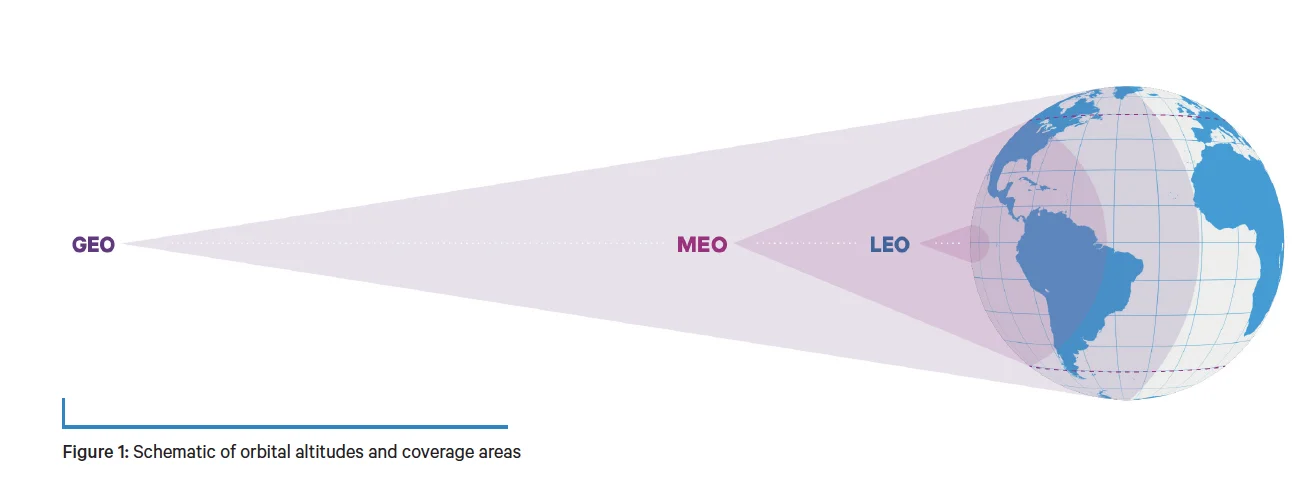
Geostationary Earth
Orbit Satellite
- Orbit the Earth at an altitude of over 30,000 km above the equator, matching the Earth’s rotational period.
- Appear to be stationary in the sky from a fixed point on Earth.
- Mainly used for weather data, broadcast TV, and some low-speed data communications.
- Advantages: high-capacity density, low cost per bit, large coverage area.
- Disadvantages: high latency (about 600 ms)
Medium Earth
Orbit Satellite
- Orbit the Earth at an altitude between 5,000 and 20,000 km, moving faster than GEO satellites.
- Complete one orbit in between two and eight hours.
- Mainly used for navigation purposes, such as GPS, Glonass, and Galileo.
- Advantages: lower latency than (about 50 ms), higher throughput than GEO satellites.
- Disadvantages: need more satellites to cover the same area, need more complex tracking systems to maintain contact with them.
Low Earth
Orbit Satellite
- Orbit the Earth at an altitude up to 2,000 km.
- Complete one orbit in about 90 minutes.
- Mainly used for communication and observation purposes, such as satellite phones, internet access, remote sensing, and space exploration.
- Advantages: worldwide coverage, low latency.
- Disadvantages: need a large number of satellites to maintain continuous service, face more atmospheric drag and orbital decay than higher-altitude satellites.
